The short answer
Habitica is great if you enjoy running a gamified to-do list. Plenty of people drop it anyway, because keeping the list up becomes one more chore. Daybard removes the list: it reads your calendar, gives every event a quest name and lets you replay your day at night. You play by living your day, not by writing it down twice.
Habitica made "gamify your life" a thing: an avatar, XP and loot, earned by checking off tasks and habits. It has a real community, parties and group quests. But the deal is that you feed the list, every single day. The day you stop entering things, the adventure stops. If you're searching for a Habitica alternative, you probably want to keep the game and lose the admin.
Habitica vs Daybard: where the game comes from
| Habitica | Daybard | |
|---|---|---|
| Where quests come from | Tasks, habits and dailies you type in | Your calendar, read automatically |
| Daily effort | Maintaining and checking the list | None beyond living your day |
| Story | Little: checkboxes | Your day replayed as chapters, with choices |
| Failure | Missed dailies cost you health | No choice is ever punished |
| Social | Parties, challenges, group quests | A lighter guild |
| Platforms | Web, iPhone, Android | iPhone and Mac (native Apple) |
| 🌙 Best if… | you like managing lists | you want the game without the admin |
What Habitica gets right
Let me say it up front: Habitica is still the reference. Most of it is free, it runs everywhere (browser, iPhone, Android), and the social side is real. Going on a quest with friends who count on you is a strong motivator. If you like breaking goals into small tasks and typing them in doesn't bother you, you don't need to switch.
Daybard isn't trying to be a better Habitica. It starts somewhere else, for a different kind of person: people whose days are already full and who no longer have the energy to describe them to an app.
Why starting from your calendar lasts longer
The weak spot of productivity RPGs is double entry. You live your day, then you copy it into the app. It's fun for a few weeks. Then one tired evening you skip it, the list drifts away from your real life, and the app turns into one more reproach.
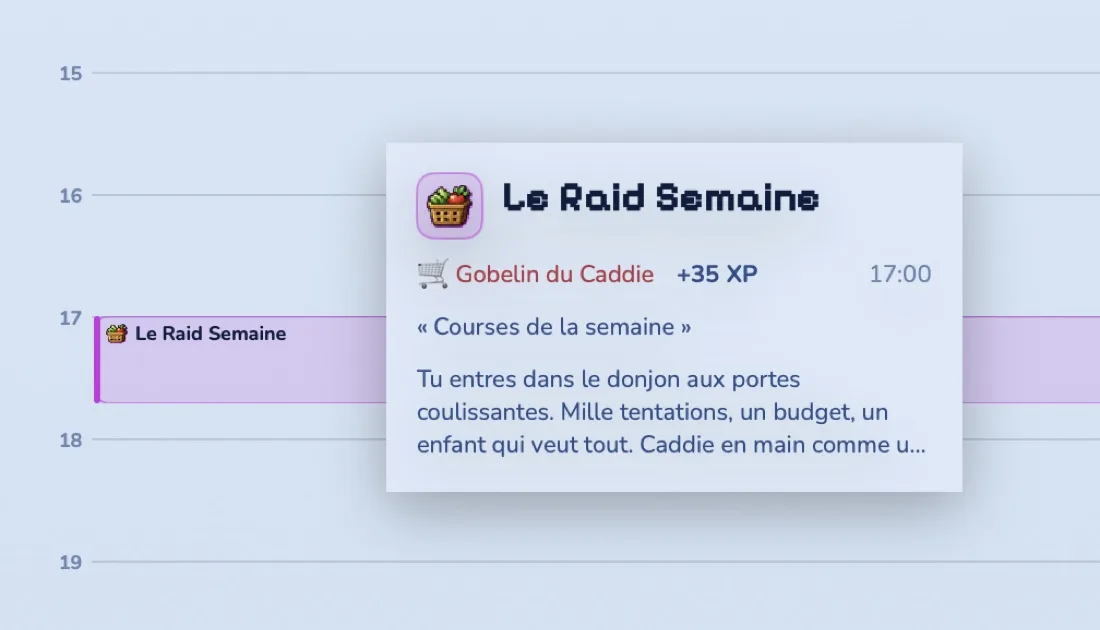
Your calendar is already filled in by work, school runs, doctor's appointments and errands. Daybard reads it as is. A team meeting becomes "The Meeting That Could Have Been an Email"; the Saturday grocery run becomes a raid against a grocery-cart goblin. You can't "forget to play", because the game follows what you actually did.
So there's no list quietly growing in a corner, and no box ticked out of habit just to save a streak. What you get instead is a story: six narrative styles to pick from (heroic, dark epic, comic, mythological, fairy tale, dungeon parody), turn-based fights and a Nemesis every week. Switching style costs 300 gold in the settings, which makes it a small goal in itself.
Punishment: the part that makes people quit
In Habitica, an unchecked daily costs you health. Some people find that motivating. For a parent who spent the night up with a sick baby, it's the last straw, and that's often when the app gets deleted. Daybard made the opposite call: at night, each moment offers three paths (noble, wise or heroic) and none of them is ever punished. Your hero moves forward anyway.
The only thing at stake is your evening streak, and even that has a safety net. Miss one to three evenings and the Vigil lets you catch up in a short version, stitching your streak back together instead of breaking it. One day reward per day, so it stays a ritual and not an XP race.
What Daybard doesn't have (and Habitica does)
- No Android or web version. Daybard is a native iPhone and Mac app.
- No habit list to check off. You can add a moment in one sentence ("gym at 6pm tomorrow"), but it isn't a habit tracker.
- Lighter social features. The guild exists, but it's nowhere near the size of the Habitica community.
Switching from Habitica to Daybard
- Install Daybard on iPhone (and on Mac if you want the full calendar) and allow calendar access.
- Drop the to-do list. Your existing events become your quests. Nothing to recreate.
- Add a lived moment if you want, in one sentence: a workout, bath time, an important call.
- At night, replay your day on iPhone: XP, gold, loot, boss of the day and your evening streak.
- Keep Habitica for what it does well if you like: nothing stops you from running both for a few weeks.
Keep the game. Drop the to-do list.
Free download, no account. Your calendar becomes your adventure tonight.